

|
We each began a (more-or-less) weekly blog in February, 2006. In part, we do this to keep our writing noses to the grindstone, and in part to reveal some internal dialogue to our nearest and dearest - and any other interested website readers. The most recent blog entries are at the top of the page. Click here to see the index of all blog topics. [And to read the 2007 blog entries, click here] |
|
Bill's Blog 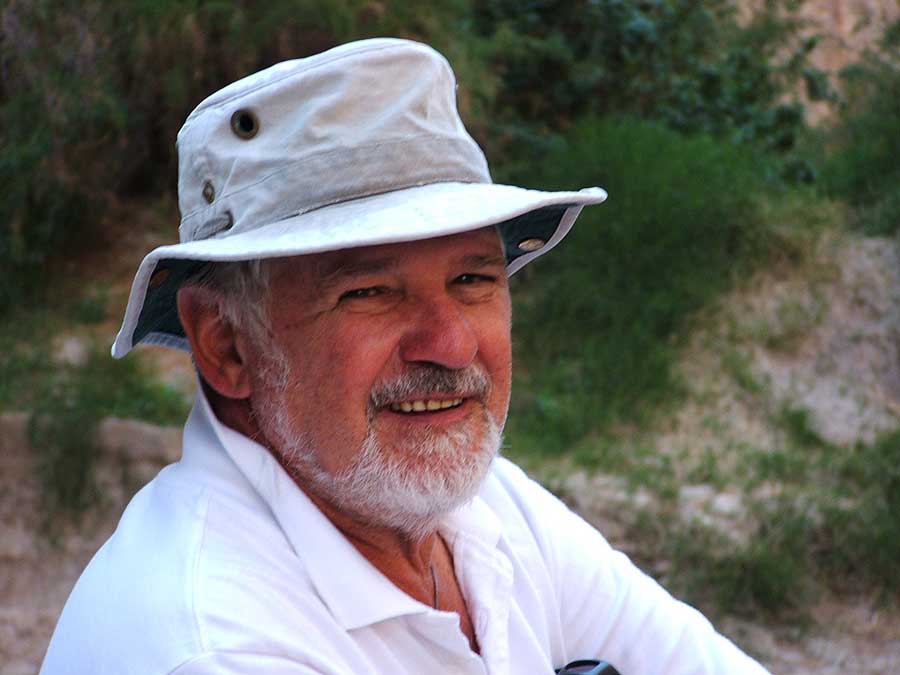 About Bill About Bill |
Pat's Blog 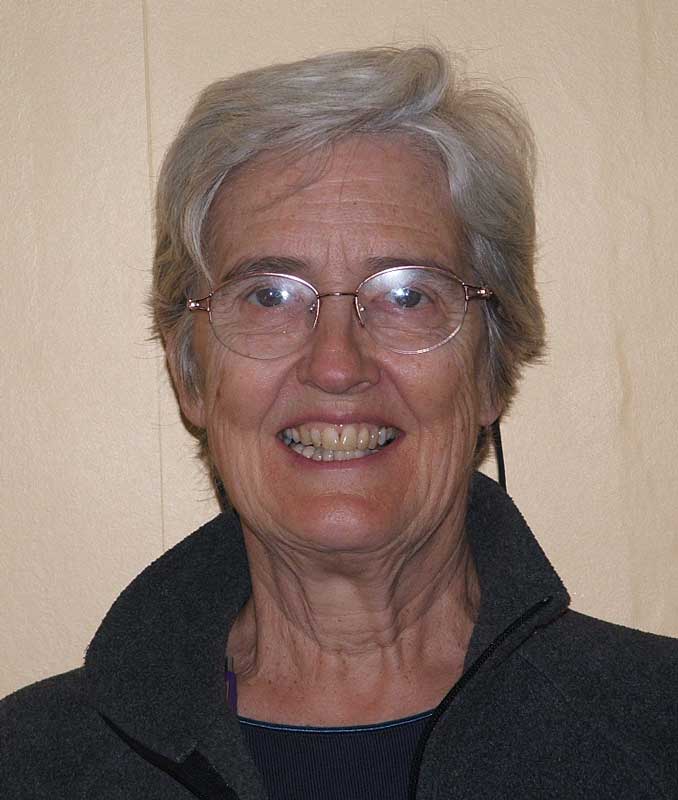 About Pat About Pat |
December 17, 2006 (Bill: Christmas shopping) About a quarter of a century ago the existential psychotherapist/philosopher Rollo May (Love and Will, Man’s Search for Himself, The Discovery of Being) expressed concern that due to the spectacular technological advances since the age of enlightenment we were losing our sense of being. We identify with technology to the point where we are dehumanizing ourselves. In his writings on axiology Robert S. Hartman posited three levels of value, each level infinitely (his word) more important, and of greater value than the preceding level.
As another Christmas perpetrates yet another shopping barrage, it's hard not to believe that technology hasn’t trapped us at the extrinsic level. . With thousands of identical shopping malls so you can’t even tell what part of the country you’re in, and whole generations vying for and wearing the same designer tagged clothing, we’ve been homogenized as a culture. In the interest of “the economy” we’ve dumbed ourselves down to the lowest common denominator. And, thanks to our federal government, we even have ‘No Child Left Behind’ complete with standardized tests to verify that, to the extent that we’re all the same, we’re all ok. Where are the Jeffersons, the Lincolns, the Picassos, the Ghandis? Madison Avenue now defines how to be a person and the primary role now foisted upon us is that of the zealous consumer. We seem to have bartered away our individual uniqueness in order to fit this role. The price we’ve paid is our individuality. And with it our social responsibility as individual citizens of our community. How did we lose ourselves so badly? Do we want our epitaph to be "I had the most stuff"’ or "I made my full contribution to global warming, I did my share!" I don’t know what the answer is, but I suspect that some of the questions might be: Who are you? What really matters to you? What are your hopes for your grandchildren? How would you like things to be in your country, in your world? And what are you doing to make things more the way you’d like them to be? Perhaps it's time to take back our country and address such issues as health care, education, international poverty, global warming, and world peace. One place to start would be to check out the Global Marshall Plan to learn more. December 9 , 2006 (Bill: Depression in the young) [Ed Note: This one is old, webmaster just found and posted it since it's still timely.] I saw a brief blurb in the Minneapolis Star Tribune about the growing concern that antidepressants may increase the risk of suicide in young people, and the resulting debate regarding recommendations that tough new warning labels be put on antidepressants. I thought it has long been obvious, not only to mental health professionals, but to much of the lay population, that depression by definition means ‘to push down below one’s level of conscious awareness’, and that what is being pushed down is whatever the depressed individual doesn’t want to know and/or isn’t prepared to deal with in his self perception or where he ‘fits’ in the world. Given that understanding of 'depression' is it surprising that when one takes a drug to alleviate the depression one is confronted with the depressed material rising to consciousness. It thereby has to be dealt with whether or not one is prepared to deal with it. One way to deal with it is to conclude that life isn’t worth living or I don’t deserve to be alive. Tough new warning labels won’t help. Antidepressants ignore the root cause of the problem and instead attempt to treat resulting depression which is only a symptom of the problem. The primary reason for teen age depression was succinctly described over thirty years ago by the cultural anthropologist Ernest Becker in his Pulitzer Prize winning book The Denial of Death.
Our culture fails to provide a meaningful role for teenagers. There’s nowhere that they fit. What are they to do with all that horsepower they’ve developed as they’ve matured through puberty? Essentially society says: “Your role is to be a good consumer, buy stuff, ignore all that horsepower your feeling, slip your clutch for another decade or so and then maybe we’ll find something worth while (heroic) for you to do.” More and more teenagers are responding by getting depressed. Giving them a few more basketball courts and maybe a chance to work at McDonald’s won’t resolve the lack of meaningful roles problem. Neither will tough new warning labels on antidepressants. And where do teenagers hang out these days? At the mall. Does that tell us anything? They’re like the lions and tigers we see pacing back and forth in their cages at the zoo, they know something is wrong, but they don’t know what it is. December 6 , 2006 (Bill: Different world views) I’m reading Bush On The Couch by Justin Frank, a clinical professor in the Dept. of Psychiatry at George Washington University. Similar to the type of psychoanalytic study the CIA does of foreign leaders, it is a psychological case study based on the available public knowledge of George W. It is a very compelling and frightening read. I was particularly struck by one piece of information the author mentioned: “According to an extensive study conducted jointly by Stanford, UCLA, Berkeley, and the University of Maryland, the fundamental difference between conservatives and liberals is a resistance to change that is based on fear. This study fits well with and verifies the comment that the social psychologist Jack Gibb made to me about twenty-five years ago: “By about the age of three we make the single most important decision of our lives. We either decide that the universe is dangerous and spend the rest of our lives protecting ourselves, or we decide that the universe is exciting and spend the rest of our lives exploring it.” For me, this explains the alarming success of the ongoing fear-mongering tactics employed by the current administration. It feeds the fundamentalist conservative right’s fear of change and those who are different, and encourages them to support ‘getting the bad guys’ at all cost. FDR was right when he said “We have nothing to fear but fear itself.” Fear is now costing us our basic constitutional liberties and our international standing as a basically moral nation. Recall that nearly 200 years ago James Madison said: “I believe there are more instances of the abridgement of the rights of the people by the gradual and silent encroachment of those in power, than by violent and sudden usurpation.” Perhaps, with the new Congress coming, it is time for all of us to write to our representatives to repeal the Patriot Act abridgements of our civil rights, prohibit torture in US-run prisons, and the doctrine of preemptive strike. November 20 , 2006 (Bill: On my birthday) Today is my birthday, I’m now 71. And, as is usually, but not always the case, it falls in the same week as Thanksgiving. What do I have to be thankful for? Excellent health. A happy primary relationship with Pat. Kids and grandkids (about to become a great grandfather in January). An array of dear friends strewn throughout the U.S. and Canada. And sufficient resources to sustain this wonderful full time land-cruising lifestyle. On top of all that, I’ve developed a powerful resolution to learn to play classical guitar. I’ve been following instruction manuals and enjoying regular daily practice for the last few months. Then, last week in Eugene, Oregon, I found a place to take four lessons. To say that life is good seems like a ludicrous understatement. For the last couple of years I’ve been acutely aware of the privileged life that I lead. We are comfortable without concerns about danger or hunger or deprivation. We complacently spend too much and consume too much, often with never a thought and thus no awareness of our exorbitant consumption levels. In that regard, Pat recently read a quote to me from Thomas Homer-Dixon’s The Up Side of Down:
I do indeed have much to be thankful for. Part of being thankful is remaining aware of just how inordinately privileged I am and making myself more generous and available to people who struggle to meet the most basic needs of life just so they can get through the day. November 5 , 2006 (Bill: Voting) Here’s a little bit if information leading into Tuesday's non-presidential year election. The U.S. lags behind over 100 countries in voter turnout. In our off-year elections about 40% of the registered population vote. We’re outdone by both old and new democracies. Outdone by both Iran and Iraq among others. Thus my opinion that we should make voting compulsory for all eligible voters as is done in Australia and several other countries. That step alone would go a long way toward cleaning up the mess we currently have. The poor and uneducated of the working class, and many in the Hispanic and black communities no longer believe that their vote has any influence. Politicians would run for office differently if they knew that everyone in the community they represented would be going to the polls. It would help retrieve voter influence from rich corporate lobbyists. Since the country seldom elects to follow my advice, I urge you to vote and encourage everyone you know to do the same. Do it! November 3 , 2006 (Bill: My heroes) The other day Pat said to me, “Who are your heroes?” The question got me reflecting on who they might be. Who are the people, teachers, poets, authors, colleagues and friends who have most influenced my thinking and contributed to the shaping of how I see the world and who I am now? I don’t recall any especially strong adult model influences from my childhood and adolescent years. You’d think I’d have a few, but none come to mind. Not parents, nor teachers, nor the parents or older siblings of friends, nor relatives, no uncles or aunts or grandparents. No friends or classmates for whom I recall having strong admiration. I certainly had a network of good friends, but it seems I grew up without any real mentor. The first time I recall getting my proverbial socks knocked off psychologically and intellectually was when in the U.S. Navy, stationed at Kami Seya, Japan hanging around the barracks all alone because my entire watch section (about eighty strong) were off to Yokohama on liberty and I, being broke, stayed back on the base. I had run out of things to read, and, it being a Sunday morning, the base library was not yet open. I ambled around l the bunks and lockers until I came across an anthology of poetry lying open on an upper bunk. I picked it up and read Vachel Lindsey’s poem The Leaden-Eyed:
I was stunned. How could something be so blatantly true while I had never noticed it or thought of it? And there it was so clearly stated. Who would ever guess that poetry could be so powerful? On that day I was hooked. I went from Lindsey to John Donne’s 93rd canto (No man is an island...) to William Blake to immersion in poetry as a way of making sense of the world. More powerful than philosophy or theology because it showed up with the emotions left in, and it even sang. Since that day some fifty years ago poetry has been a dominant influence on who I’ve become in life and remains a joy and delight for me. October 21, 2006 (Bill: Under the banner of "Freedom") Under the banner of ‘freedom’ President Bush and his administration have:
What is going on when a systematic progression of government activity flies directly in the face of what FDR called the four freedoms: freedom of speech; freedom of religion; freedom from want; and freedom from fear? Once again I find myself saying: “The explanation cannot be as simple as ‘How can they be so stupid?’ or “They’re basically a bunch of evil bad guys.” These are intelligent educated people who are doing this. What is their thinking? What’s their rationale, their motive, their reasoning? To help get my mind wrapped around those questions so that I can better act to confront them, I am currently reading linguist George Lakoff's latest book Whose Freedom? In it, he addresses the connection between the mind, body, and emotions. We're not as rational as we think, and our logic is tied much more closely to our emotions than we know. October 6, 2006 (Bill: Marriage) Nietzsche made a wonderful comment on marriage about 125 years ago. “When marrying, one should ask oneself this question: Do you believe that you will be able to converse well with this woman into your old age? Everything else in marriage is transitory, but the most time during the association belongs to conversation.” September 14 , 2006 (Bill: Dramatic irony) September 11 , 2006 (Bill: Different policy views)
August 30, 2006 (Bill: Corporate deification) August 23, 2006 (Bill: The Medicare snafu)
Give me a break! Instead of seeking out qualified people, this administration has consistently appointed political hacks to top level management positions in the federal government, as part of its effort to crumble some formerly effective programs. It is clearly succeeding. August 15, 2006 (Bill: Nietzsche) Imagine my delight last week when reading The Yalom Reader (Irvin Yalom) I found in chapter nine a discussion of Nietzsche’s remarkable contributions to existential thinking. Yalom articulates my long term stance on Nietzsche incredibly well, certainly a good deal better than I can. It was nice to discover someone else, especially one as well known as Yalom, supporting my position that Nietzsche has a huge amount to offer and was not simply a “God is dead” anti-life philosopher. It appears that, as Nietzsche predicted, he may be coming into his own a hundred years after his death. For a quick glimpse of what Nietzsche was about read pages 375-380 in The Yalom Reader by Irvin Yalom: New York, Basic Books, 1998. If that cranks up your interest, have a go at reading The Portable Nietzsche edited by Walter Kaufman: New York, Viking Press, 1954. August 3 , 2006 (Bill: Politics!) Listening to NPR’s All Things Considered last night was informative and sadly entertaining. The
gist of one news report was that Congress has decided to allow the cafeteria in the Capitol to July 20, 2006 (Bill: Pre-emptive strikes) In the course of 7 days ending yesterday there have been over 2,000 air attacks by Israel on Lebanon. And no-one is calling it insane. In the last decade, the US has set back the course of peace by 100 years. It has made the idea of "pre-emptive" strike acceptable as a rationale for invading or bombing a country. The US has led the way, and modelled that behavior for others to follow. Just watch how Israel has learned from us. In domestic situations, pre-emptive strike is called assault and battery with a deadly weapon. What's going on in the middle east is standard "We have to destroy the village to save it" bullshit, and our government is highly invested in not calling a spade a spade. July 1, 2006 (Bill: Existential issues)
June 26, 2006 (Bill: Military spending) Meanwhile polls by the Program on International Policy Attitudes indicate that more than 80% of the U.S. voting population wants reduced military spending and increased spending for social services such as health care and education - over 50,000,000 of us are without health care insurance. Whatever became of our representative democracy? The will of the people? Just who is being represented? Who’s interests are being served? June 23, 2006 (Bill: Our Calanais stones) It was a poignant reminder that through the development of language Man is unique in the animal kingdom. He is the only animal to have evolved to the point where he is meaning-driven rather than instinct-driven, and to that end must and does create symbols and rituals which ascribe meaning to life. We are the only species who, as Shaw noted, must explain ourselves to ourselves. And now, in our present culture what drives our behavior? How do we ascribe meaning to our lives? To what do we devote untold hours, days, and years of collective time, energy and tribal resources? What sites have we created and deemed sacred? Where do we congregate? Where are our Calanais Stones? Have shopping malls become our sacred ground? Is it ‘shop ‘til you drop’ that we’ve sanctified? I fear we have so subordinated our human values and rights to the demands and expectations of market forces that we are turning our entire society into docile consumers. It appears Ralph Waldo Emerson accurately expressed our creeping deification of consumerism some hundred and twenty-five years ago when he said; “Things are in the saddle, and they ride mankind.” [NOTE: due to distractions and constraints on accessing the Internet during our travels in the UK, the blog entries are on hold for a few weeks.] April 26, 2006 (Bill: Our default settings) I’ve been thinking again about what makes us human beings tick. At this point in time the world population is about six and a quarter billion. It’s a bit tough to get your mind wrapped around a number that big. If you counted it out at the rate of one number per second it would take you more than 200 years to finish counting. (Actually a lot longer than that because all the big numbers like 37,491 take more than a second to say.) Whereas six and quarter billion minutes ago would take you back 12 or 13 thousand years. So here we are, all 6,250,000,000 of us, each unique, each with our own names. Each of us harboring the miracle of self-awareness, the ability to self reflect and contemplate whether we are being a person right or should we try to change the way we are. As we go through life, we develop many of what I call ‘default settings’. Those ways of behaving and responding to situations without really consciously thinking them out. Are we essentially hopeful or fearful? Go for it or be careful? Competitive or cooperative? Doubter or believer? Yes or no? Abundance or scarcity focused? Do we sort for what’s wrong in a situation or what’s right? Do we see the universe as friendly or unfriendly? These default settings have a huge impact on how we go at our lives, on what makes us tick in our own unique way. When we are unaware of them they often trump or short circuit our rational thinking process. When we are aware of them we can control them; when we’re unaware of them they control us. April 19, 2006 (Bill: The Iraq war) Here in the United States we have a form of government which is called a representative democracy. That means we elect a president, senators and representatives and send them to Washington to represent the will of the people and speak and act on our behalf. A study by the Program on International Policy Attitudes (PIPA) found that on the eve of the 2004 election, 74 percent of the public felt that the United States should not have gone to war if Iraq did not have weapons of mass destruction or was not providing support to Al Qaeda (58 percent of Bush supporters, 92 percent of Kerry supporters and 77 percent of the uncommitted). PIPA studies have also shown that by April 2003, a few weeks after the invasion, a large majority felt that the UN should take the lead in resotring civil order and economic reconstruction in Iraq. By December 2003, 70 percent of us held that the UN should also ‘take the lead to work with Iraqis to write a new constitution and build a new democratic government.’ As pointed out in Noam Chomsky’s recent book Failed States, these figures suggest a simple ‘exit strategy,’ if our current administration had any interest in pursuing this course: follow the will of the American public, and transfer authority to the UN - assuming, as always, that Iraqis favor this option. April 14, 2006 (Bill: Presidential misbehavior)
Taken as a whole, these acts represent a pattern of behavior which conflicts with our constitution, international law, and any common understanding of morality. I am deeply concerned about the appalling precedent that will be set for future presidents if the Judiciary Committee does not initiate impeachment proceedings in response to this consistent pattern of executive misbehavior. Representative John Conyers has proposed H. Res. 635 which calls for a Select Committee to investigate President Bush’s lies about Iraq, wiretapping, etc. and to make recommendations as to whether there is sufficient evidence for impeachment. I urge you to write (fax is recommended) to your congressional representatives in Washington and on the Judiciary Committee and ask them to support Rep. Conyers and vote yes on HR 635. March 13, 2006 (Bill: Head Start) Did you know that:
I want more support for Head Start and less need for building more and more prisons so I’m contacting my Senators and my House representative to let them know that. If you agree, I’d like you to do the same: call, write, e-mail, fax your congressional representatives and let them know that you support Head Start and want to see the program strengthened rather weakened. Do it now! You live in a representative democracy. Don’t be a spectator who votes once every four years. Be enough of an activist to let your representatives in Washington know what you want from them. Thank you! March 9 , 2006 (Bill: The National Debt) Notice To All Residents of the United States: As of this morning the national debt stands at $8,280,138,347,988.18. The debt increases because the U.S. Government spends more than it collects in taxes. This is called deficit spending. Since last September 30th the National Debt has continued to increase an average of $2.17 billion per day. The estimated population of the United States is 298,726,564 so each citizen's share of this debt is now $27,718.12. Please send your check in that amount to the Treasury Department at once. Each day’s delay is costing you an additional $726.42. You will be relieved to learn that the Treasury Department does accept Visa, Mastercard, Discover and American Express. Remember, these cards have been created to allow you as an private citizen to engage in the miracle of deficit spending. Should you decide to pay by personal check, please add $2179.20 to pay for the three days it will take for your check to clear. And, of course, advise your congressmen that you badly need additional tax cuts in order to satisfy the Treasury Department's appetite. February 25, 2006 (Bill: Works of Ernest Becker) Essentially, Becker found that those fields clearly show that man is the first species to be motivated and driven primarily by two basic psychological needs: the need to avoid excessive anxiety; and the need to maintain and support sufficient self-esteem to feel as though he matters, has value, and is worthy in the culture in which he is born into or finds himself. Through the evolutionary development of the ego, which Becker defines as the first psychological organ to evolve, and the development of language, man learned to control his instincts, put them on hold, evaluate situations, and examine alternative courses of action. He does this by employing language to symbolize his day-to-day life experience and by responding to the meaning of the symbols. Thus man has become the first species to be primarily "meaning-driven" rather than "instinct-driven." Thus, if your spouse answers the phone and says: “Its your mother, she wants to thank you for the birthday gift” you respond very differently than if your spouse says: “It’s the police they’ve been told there’s a bomb planted in our house due to ignite in fifteen minutes.” This step in evolution has created a world-changing - possibly earth-shattering - impact on life on this planet. It has provided the means to create, among other things, ideology, philosophy, theology, nationalism, chauvinism, jingoism, patriotism, medicine, engineering, mythology, environmentalism, war, and genocide. It has also endowed our species with the responsibility of being active participants in, rather than passive recipients of, the evolutionary process. One of the most compelling and weighty questions of our era is how we are handling that responsibility. February 19, 2006 (Bill: Integrity) It appears that integrity is closely tied to the concepts of trust and truth. “He has a lot of integrity” usually means "what you see is what you get." Apparently when you fail to follow Shakespeare’s advice and “to thine own self be true,” your muscles know about it and say ‘no,’ and your unconscious knows about it and mis-speaks for you. How do we decide when a person is telling us the truth or lying to us? When we hear a politician speaking how do we determine whether or not to believe him? Perhaps we should have kinesiologists on hand whenever politicians make speeches. |
December 14, 2006 (Pat: The Iraq situation)
In all the discussion that's been going on, I don't think I've heard these ideas from anyone. They sure make sense to me. Sadly, I'm not holding my breath waiting for this to happen. December 9, 2006 (Pat: How big is your "Carbon Footprint?")
Questions for us: (1) Are we above or below average? (2) Could we reduce our footprint without hardly noticing? and (3) Will we? November 29, 2006 (Pat: Future living) Made me think that, in terms of energy, heating needs have got to have greater priority than transportation or plastic packaging. A hundred years from now, when the oil is gone, maybe we'll all live in little villages and do our "transportation" through the ether. With a camera and big screen in the living/dining room, we sit down to share virtual Thanksgiving dinners with our distant dear ones. Private cars have long since gone the way of the dinosaur, and if we need to go somewhere we use our legs or public transportation. Most of our living and working happens right in our little community. We get social enjoyment from our neighbors, food is all sold in bulk, there are no more shopping malls, and with all the "found" time previously spent stressed-out driving madly around (on average, Americans spend 100 hours a year just commuting), everyone is a helluva lot happier. Sounds pretty good to me. November 20, 2006 (Pat: Visiting others) We remember that fish and guests begin to stink after 3 days so we remind our dear ones it'll be more like having a short-term neighbor than a guest. We don't think we've overstayed our welcome anywhere - at least if we have no-one has mentioned it. We retain our usual routines, get up early and eat breakfast in Clemmie, make our own lunch, offer to bring potluck for dinner (or invite hosts to happy hour), and retreat to our own space when seems appropriate, or at nap time. It's a fabulous way to visit. November 11, 2006 (Pat: Rebuking our president)
After six years of doing whatever he wants regardless of the consequences, and with no evidence of an ability to admit mistakes or express remorse, the President is now confronted with the fact that the American People have rejected him. We hired him as our CEO in 2000, and he has proceeded to drive our business (our country) into the ground. And now the Board of Directors (the electorate) has put him on notice that they're not satisfied with his performance. Most likely this is the first serious rebuke in his political life. Let us all hold him in the light, for our own and the world's sake. Let us hope that those close to him are able to act in the best interests of all of us. October 31, 2006 (Pat: Climate change) So what are we doing about it? Most of us Americans waste ½ of the energy we use. There are a zillion ways to reduce dependency on fossil fuels: around the house; when shopping; and transportation. We have to do something now, or we'll wish we had later. Many corporations are making some effort to cut their waste - but you'd be totally aghast at the amount of energy the military wastes. For example, the Navy has 12 active aircraft carriers, and when practicing launching and retrieving just one of these burns about 200,000 gallons of aviation fuel a day. For our part, we regularly review and adjust our commitment to changing the way we do things. We encourage readers to take a ½ hour to discuss with their immediate family what they can and will do. October 20, 2006 (Pat: Growth) Made me think about growth and the day's accepted wisdom that economic growth is a continuous unending goodie neccessary to us all. Well think about that. What do we get when something constantly grows? First we get maturity, but after that it's called cancer. Our economic system is way past maturity. Why do we always want more, more, more? Like Bill Clinton (who at least had the insight to recognize it and courage to confess it) we do things because we can. Humanity hasn't got the hard lesson yet: do only those things that are necessary. October 10, 2006 (Pat: Foot on Neck)
If you live in the US, the average foot is 4 times as heavy as the foot of someone in China, and 6 times as weighty as a person in India. Don't even ask how much heavier it is than a starving Darfurian. October 2, 2006 (Pat: Military spending) September 24, 2006 (Pat: The coming dark age) The seeds of self-destruction have been growing for decades. The seething "war on terrorism," birthed in the torture of Cairo jails 50 years ago, is now a full-blown conflagration. The booming western culture of materialism fueled by corporate greed is consuming the global environment. And, the checks and balances of America's political greatness have shrivelled almost entirely away. It's easy to imagine that fiifty or a hundred years from now human life on this planet will be well into another Dark Ages period. September 18 , 2006 (Pat:Death of the common good) These past 6 years, and presumably for the next two, my country is being governed by a bunch of cronies who don't understand the fundamental difference between policy and politics, who never internalized the lessons of Civics 101. Policy is about the common good. Politics is about grabbing and keeping power at all costs. Our so-called leadership seems to be building a funeral pyre for the poor old common good. I think I'm disgusted. August 31, 2006 (Pat: Confronting existence) We humans must consciously or unconsciously come to terms with the essential facts of our existence. These are scary things to face: (1) we are going to die; (2) we do not control our world; (3) we live and die alone; and (4) the universe is indifferent to us. It seems that there are two ways that individuals deal with these anxieties of existence.
Irvin Yalom said: "Wisdom does not lead to madness, nor denial to sanity. The confrontation with the givens of existence is painful but ultimately healing." This confrontation, it seems to me, is the true work facing each of us. And it is healing work: if we don't do it we must use up psychic energy to keep the lid on Pandora's box. August 22, 2006 (Pat: Winning hearts & minds) August 15, 2006 (Pat: Newton's 3rd Law)
FYI, Newton's 3rd law states "For every action, there is an equal and opposite reaction." This means that in every interaction, a pair of forces act on each other. Forces always come in pairs - equal and opposite action/reaction force pairs. Ergo, if one person starts a fight with another, the victim fights back - even if they have to do it surreptitiously. Just watch any kindergarten playground. August 11, 2006 (Pat: Maintenance) Why don't schools teach, beginning at a young age and continuing into high school, formal life skills? About money, where it comes from, credit, debt, and saving. About maintenance, its burden of prevention, routine care, and the drain of deferred cost. That the more you have, the more you'll be buried in maintenance. About human relations, conflict, cooperation, individual differences, and social responsibility. About health, nutrition, attitude, and fitness. About family life, child care, stress, and aging. August 4 , 2006 (Pat: The RV Life) August 3 , 2006 (Pat: Boxed in) July 28, 2006 (Pat: Two in a small space) July 13, 2006 (Pat: What really mattered?) July 4, 2006 (Pat: What do you want?) June 7, 2006 (Pat: Culture shock) June 2, 2006 (Pat: Ain't it Awful) [NOTE: due to distractions and constraints on accessing the Internet during our travels in the UK, the blog entries were on hold for a few weeks.] April 23, 2006 (Pat: Misplaced priorities) I'm interested in seeing the changes that have occured in the almost 20 years since I last went "home" to Scotland. I Wonder if they're having water problems. Did you know that 1.1 billion people don't have access to safe water and 2.6 billion people are without basic sanitation? A situation that is steadily getting worse as we head for global environmental collapse. To quote Jeffrey Sachs of the UN Millenium Project "Everything we think is at the core of our geopolitics -- the war on terror, Islamic fundamentalism -- have almost nothing to do with the real challenges we face on this planet, they are a distraction and a misunderstanding. Ignorance, misplaced priorities and indifference are keeping the world firmly on the path to disaster." And, I add, nowhere is this more true than in the USA. April 17, 2006 (Pat: Where are we going?) Mostly, I wonder where our culture is going. I recently read Radical Evolution by Joel Garreau. I recommend it to you. He sets out three scenarios that could result as the accelerating rate of technological invention and mass consumerism cranks humanity up this incredible curve of change that we all sit on.
What do you think? And what are you doing to prepare and help your kids deal with the many toxic aspects of human culture? March 20, 2006 (Pat: Traffic) March 12, 2006 (Pat: Human progress) Being there certainly forces a focus on the grand scheme of things. Made me think that perhaps humanity's idea of progress may be changing. First came language, symbols, and writing, as measures of progress for early man. Then the notion of moral improvement through religion and philosophy was seen as progress. Next, after fire and the wheel, technology and trade came along with a switch of focus to accumulation of material wealth as the measures of progress. Nowadays, it strikes me that progress is happening through an increase in our connections and interconnectedness. Each of us knows what's happening to strangers in some of the farthest corners of the globe - and maybe even we're collectively beginning to care about them. Is a life-saving shift in direction happening for our species? March 5, 2006 (Pat: Touching the Earth) February 26, 2006 (Pat: Instructing others) February 19, 2006 (Pat: Bird counting) This morning it's an unseasonable 34°F in south Texas, with a strong gusty north wind. I saw only 6 birds during my first 20-minute count time, at 8:30am. I imagine them dozing, huddled together in nooks, crannies, and shrubs with their down all fluffed up and bills tucked into their necks trying to keep warm. Later, flocks of lark buntings and white-crowned sparrows showed up, pecking at water drops from the faucet-to-hose connection outside our window. One got left behind as the others zoomed away in a small cloud. He seemed disoriented, lost almost until he saw his group winging again over some bushes in the distance. Immediately, he took off after them and left me to wonder... What?. |

Copyright 2005 The Trouser Rollers. All Rights Reserved.
www.callipygia600.com